Asset management is an essential part of successful business operations. It involves tracking and managing the physical hardware assets of an organisation, such as servers, computers, printers, and other devices. Properly implementing a hardware asset management system allows businesses to keep track of their hardware assets, allowing them to properly allocate resources and maximise their ROI.
In this article, we discuss the key benefits of proper hardware asset management and how it should be an essential part of business operations.
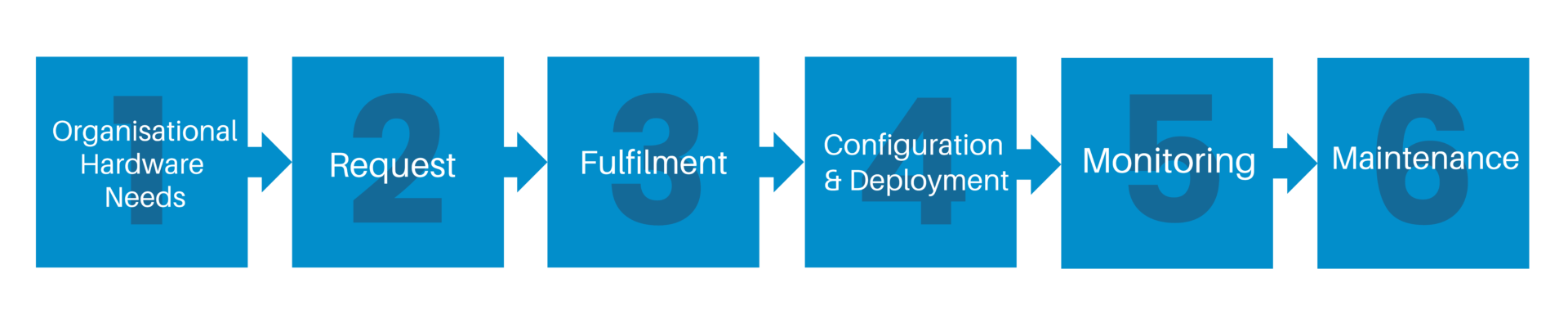
Hardware Asset Management (HAM), is a systematic approach to managing hardware assets throughout their service lives. It is vital to any business that relies on technology. In general, HAM covers all aspects of hardware management, including planning, procurement, deployment, monitoring, maintenance, and retirement.
It consists of six parts:
One of the most significant benefits of hardware asset management is cost savings. By properly implementing Hardware Asset Management, businesses can streamline their processes and reduce unnecessary expenses. This results in a more efficient operation that is better equipped to handle future challenges.
There are several ways in which hardware asset management helps businesses reduce company spend:
Reduced maintenance costs: Regular maintenance of IT assets is essential for keeping them in good working condition. However, it can also be expensive. With hardware asset management, businesses can track maintenance schedules and proactively schedule repairs. This reduces the likelihood of costly breakdowns and helps keep maintenance costs under control.
More-accurate hardware budgets: One of the biggest challenges in managing IT assets is budgeting for hardware replacements and upgrades. HAM software can help track asset lifecycles and provide accurate forecasts for when hardware will need to be replaced. This allows businesses to plan ahead and budget accordingly.
Less hardware spend: Another significant expense associated with IT asset management is hardware purchases. By properly tracking their existing inventory, businesses can identify redundant or underutilised assets that can be repurposed or disposed of. This reduces the need for new hardware purchases, saving money in the process.
More-efficient disposal processes: When hardware reaches the end of its useful life, proper disposal is essential. Not only does this help protect the environment, but it also ensures that sensitive data is properly wiped from devices. HAM software can help businesses identify when assets are nearing the end of their lifecycle and automate disposal processes to minimise manual work and ensure proper procedures are followed.
Minimal manual work: Another key benefit of HAM is the ability to automate many of the manual tasks associated with IT asset management. This includes tasks like tracking assets, scheduling maintenance, and managing software licenses. By automating these processes, businesses can free up staff time to focus on other areas of the business.
Enhanced Security and Risk Management
In today’s business environment, cybersecurity threats are an ever-increasing concern for organisations. With the increased use of multiple hardware devices, it is difficult for security teams to protect what they can’t see. However, effective Hardware Asset Management can help provide a complete listing of all hardware assets, along with relevant version information.
This allows security teams to create complete coverage strategies and identify vulnerable assets. By identifying all hardware assets within an organisation, HAM helps to ensure that security controls are properly implemented, vulnerabilities are identified and addressed, and unauthorised devices are prevented from being connected to the network.
In addition, HAM can also work in conjunction with IT Asset Management (ITAM) to identify unapproved hardware assets and ensure compliance with policies and regulations. By maintaining an up-to-date inventory of hardware assets, businesses can track all devices and detect any rogue or unauthorised hardware. This helps to minimise the risk of data breaches, system failures, and other security incidents.
Overall, Hardware Asset Management is a critical function for any business that values its technology infrastructure. HAM can help businesses reduce costs, enhance security and risk management, improve decision making, achieve regulatory compliance, and boost overall efficiency. The successful implementation of HAM can lead to better management of assets, ultimately leading to a better return on investment.
Get in touch to discuss with the experts at CHS Networks to discuss hardware asset management for your business.